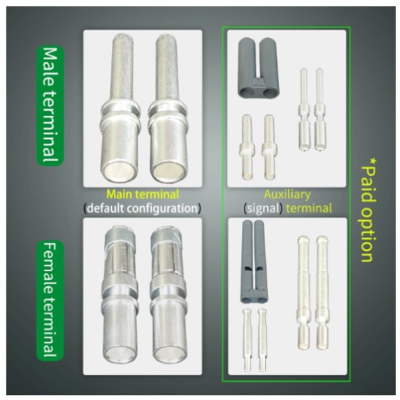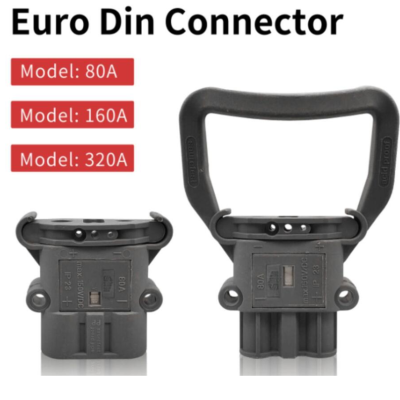
Copper is one of the most critical raw materials in the manufacturing of battery connectors due to its excellent electrical conductivity, thermal performance, and mechanical reliability. As a core component in applications such as electric vehicles (EVs), energy storage systems, and consumer electronics, battery connectors rely heavily on copper or copper alloys. Therefore, fluctuations in copper prices have a direct and significant impact on the cost structure and pricing strategies of connector manufacturers.
- Role of Copper in Battery Connectors
Battery connectors are designed to ensure efficient and stable transmission of electrical current. Copper is widely used in terminals, contacts, and conductive elements because it minimizes energy loss and heat generation. In many designs, copper content can account for a substantial portion of the material cost—often ranging from 40% to 70%, depending on the product specification.
- Direct Impact of Rising Copper Prices on Costs
The recent surge in global copper prices has led to an immediate increase in raw material costs for connector manufacturers. Since copper is a commodity traded on global markets, its price is highly sensitive to macroeconomic factors such as geopolitical tensions, supply disruptions, and increased demand from renewable energy and EV sectors.
When copper prices rise:
- Material costs increase significantly: Given copper’s high proportion in connectors, even a modest price increase can substantially raise total production costs.
- Profit margins are compressed: If manufacturers cannot pass on the increased costs to customers immediately, their margins are reduced.
- Frequent price adjustments become necessary: Suppliers may need to revise quotations more frequently, especially for long-term contracts.
- Indirect Effects on the Supply Chain
Beyond direct material costs, rising copper prices also create ripple effects throughout the supply chain:
- Inventory risk increases: Holding large inventories becomes more expensive, leading companies to adopt just-in-time procurement strategies.
- Supplier negotiations intensify: Upstream suppliers may shorten price validity periods or impose surcharges linked to copper indices.
- Volatility in project costing: For industries like EVs or energy storage, where connectors are used in large volumes, cost uncertainty complicates budgeting and project planning.
- Cost Transmission to End Customers
Connector manufacturers typically attempt to pass on increased costs through:
- Price surcharges or adjustment clauses tied to copper market indices
- Revised product pricing for new orders
- Material substitution or redesign, such as reducing copper thickness or using alternative alloys (though this may affect performance)
Conclusion
In summary, copper price fluctuations—especially recent increases—have a profound impact on battery connector costs. The effect is both direct, through higher material expenses, and indirect, through supply chain dynamics and pricing pressures. Companies that proactively manage these challenges through strategic sourcing, design optimization, and pricing mechanisms will be better positioned to navigate the evolving market landscape.
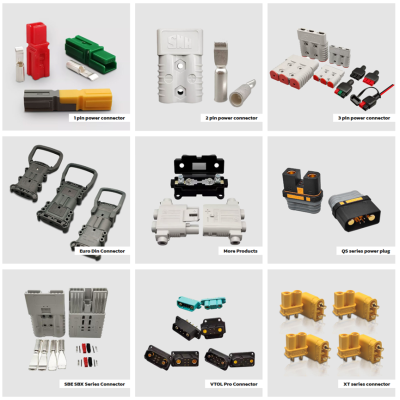
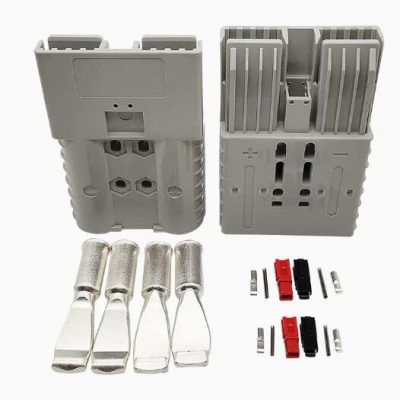
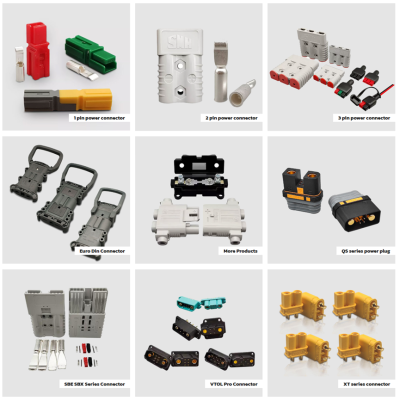
Choose SMH battery connectors with competitive prices and reliable quality. SMH has been an OEM & ODM manufacturer for battery plugs and connectors since 2012, SMH plugs has been exported to 100+ countries, product categories include Euro Din Connector, 1 pin power connector, 2pin-power-connector, 3pin-power-connector, VTOL Pro Connector, XT series connector, QS series power plug, SBE SBX Series Connector…etc.
Contact us to discuss your battery plug demand!