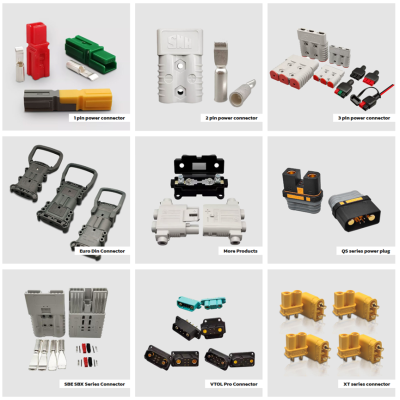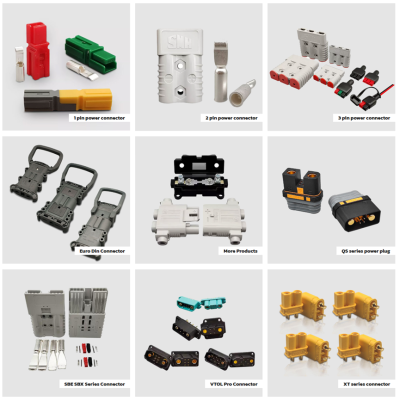
While the QS series is widely known in industrial and EV contexts, smaller QS connectors (like QS2 connector, QS5 connector) are sometimes adapted for RC batteries, drones, and high-power remote-controlled vehicles. The reason is that RC applications often demand compact, high-current connectors that are safe, reliable, and easy to swap.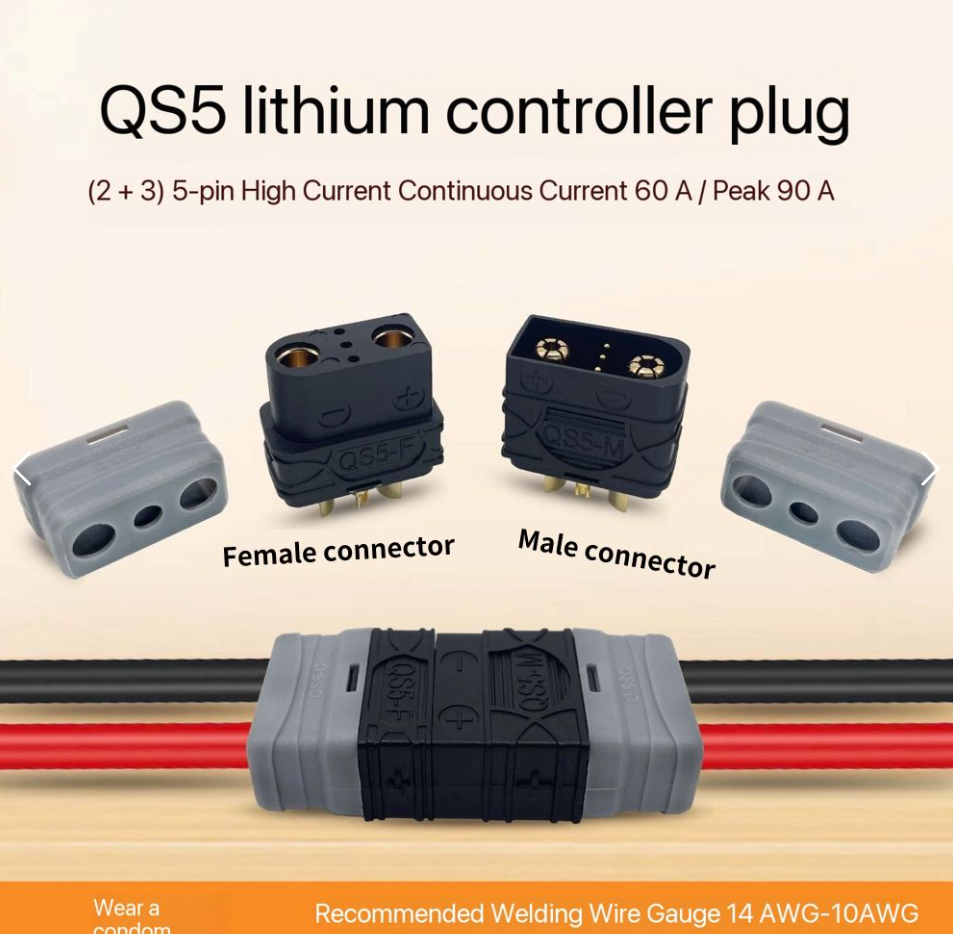
Key Features for RC Use
- High Current in Small Size
- RC vehicles, drones, and planes often draw tens of amps, especially during acceleration or lift.
- QS plugs like QS2 or QS5 provide clean, low-resistance contacts in a compact form factor.
- Quick Connect/Disconnect
- Many RC enthusiasts swap battery packs mid-session.
- QS plugs allow fast and secure mating, reducing downtime.
- Safety and Reliability
- Polarized design prevents reverse polarity, which could destroy electronics.
- Locking features or snug friction fit reduce the risk of accidental disconnect during high vibration or aerobatic maneuvers.
- Durable Construction
- Heat-resistant, flame-retardant plastics.
- Plated copper contacts resist corrosion from frequent handling or environmental exposure.
- Modularity
- QS plugs can be used in parallel or series configurations, useful for connecting multiple battery cells in high-performance RC setups.
Typical RC Applications
| Application | Connector Type | Current Draw | Notes |
| Electric RC cars | QS2/QS5 | 20–50 A | Compact size fits small battery bays |
| Drones / Multirotors | QS2 | 15–30 A | Lightweight and secure under vibration |
| Electric RC planes | QS2/QS5 | 20–40 A | Handles bursts of high current during takeoff or climb |
| High-power RC trucks/boats | QS5 | 50 A+ | Can support larger batteries and brushless motors |
Why QS Plugs Are Chosen for RC
- Safe and reliable: Protects expensive ESCs, motors, and batteries.
- Easy battery swaps: Crucial in racing or endurance events.
- Compact and light: Does not significantly add weight to aircraft or vehicles.
- Durable under vibration: Prevents mid-flight or mid-race disconnects.