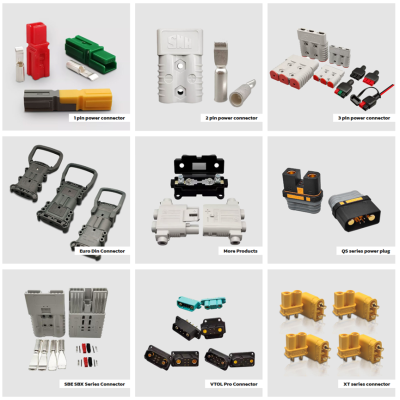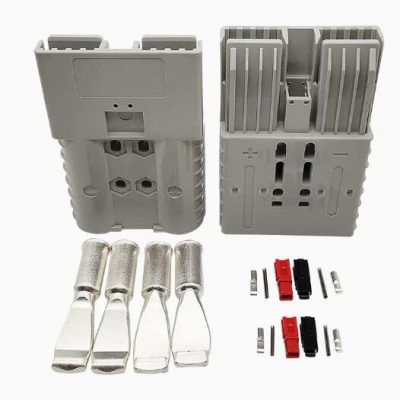
Powerpole connectors are a popular choice for DC power connections in hobbyist, amateur radio, and industrial applications because of their modularity, reliability, and ease of use. Let’s go through their key features in detail:
- Modular Design
- Stackable and keyed: Powerpole housings can be connected side-by-side in any combination, allowing multiple circuits to be integrated neatly.
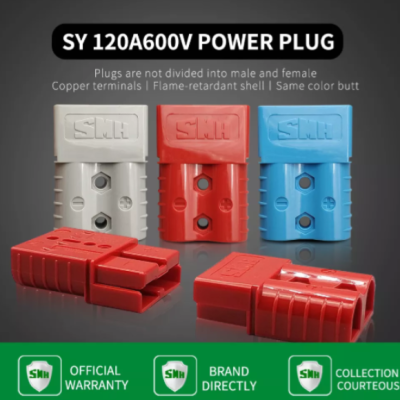
- Genderless: Each housing is identical, so any connector can mate with any other as long as the terminals are correctly oriented.
- Color-coded: Housings often come in standard colors (red for positive, black for negative) to prevent polarity mistakes.
- High Current Capacity
- Amperage ratings: SMH provides power connectors ranging from 30A to 350A, Including PP30A, PP45A, PP75A…etc, depending on wire gauge and terminal type.
- Low contact resistance: Gold- or tin-plated contacts ensure minimal voltage drop and heat buildup.
- Reliable Electrical Contact
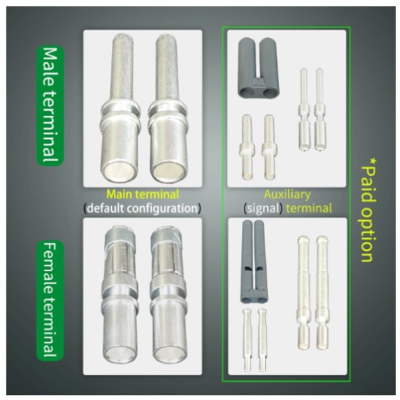
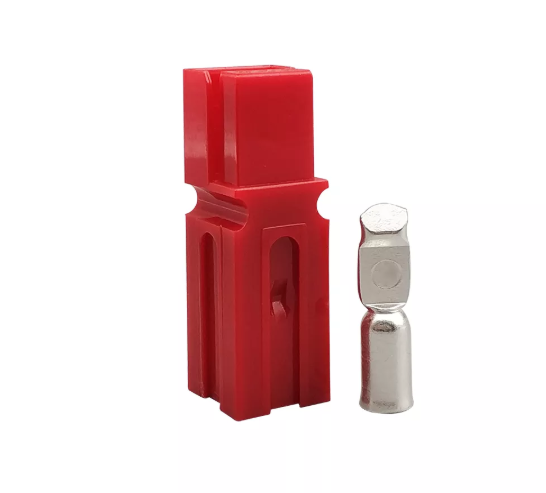
- Crimp or solder terminals: Secure mechanical and electrical connections.
- Spring-loaded contact design: Ensures consistent contact force and reduces the risk of intermittent connections under vibration.
- Durability and Safety
- Durable plastic housing: Resistant to heat, chemicals, and impact.
- Polarization features: Prevents incorrect mating.
- Secure locking: Once connected, Powerpoles resist accidental separation.
- Ease of Use
- Tool-assisted or hand crimping: Terminals are easy to attach to wires.
- Simple mating and separation: Requires only a slight pressure to connect or disconnect.
- Versatility
- Widely standardized: Used in amateur radio, RC, robotics, and industrial applications.
- Customizable configurations: You can make multi-pole assemblies for positive, negative, or multiple circuits.
- Reusability: Terminals can be removed and reused in different housings.
- Environmental Tolerance
- Temperature range: Typically from −20°C to +105°C for housings.
Vibration resistance: Maintains electrical continuity in mobile or harsh environments.