Forklift battery choice affects vehicle uptime, maintenance, safety, and operating cost. Equally important is selecting the right charging and forklift power connectors (plugs) to ensure safe, reliable power transfer and compatibility between batteries, chargers, and vehicles. This article summarizes the main forklift battery technologies, their advantages and limitations, and practical guidance on commonly used plugs and connector selection.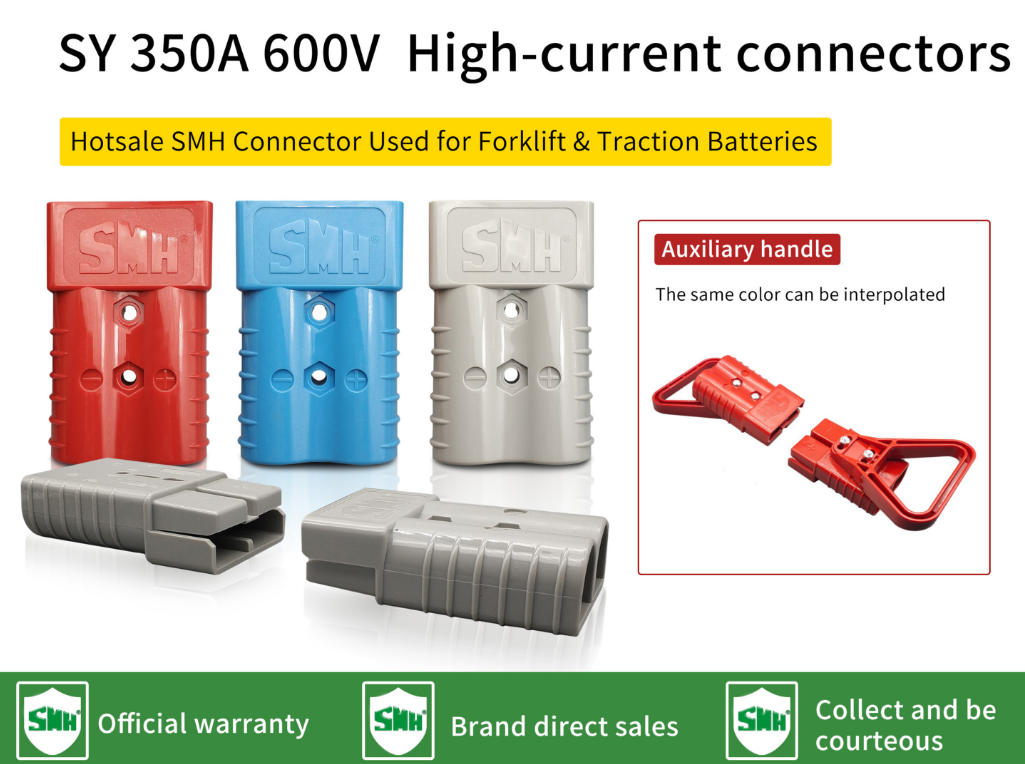
Forklift battery types
- Flooded (vented) lead‑acid (FLA)
- Description: Traditional, liquid electrolyte batteries with removable caps for watering and regular maintenance.
- Advantages: Low initial cost, proven reliability, wide availability, easy to service.
- Limitations: Require watering and regular equalization charging; emit hydrogen gas (ventilation required); heavier energy density than newer chemistries.
- Typical use: Heavy-duty all-shift operations where battery-swapping and rapid turnaround are practiced.
- Absorbent Glass Mat (AGM) and Sealed Lead‑Acid (SLA)
- Description: Valve-regulated lead‑acid (VRLA) variants with immobilized electrolyte (AGM) or gelled electrolyte.
- Advantages: Lower maintenance (no routine watering), reduced gassing, better resistance to vibration.
- Limitations: Higher cost than flooded cells; still heavier and lower cycle life than lithium; less tolerant of sustained fast charging.
- Typical use: Light to medium duty, applications where low maintenance and reduced ventilation are desirable.
- Gel lead‑acid
- Description: Electrolyte immobilized in gel; VRLA family.
- Advantages: Very low gassing, good deep‑cycle life in certain applications, low maintenance.
- Limitations: Sensitive to charging regime—overcharging can irreversibly damage cells; not ideal for high-rate fast charging.
- Typical use: Niche applications requiring deep discharge tolerance and minimal gassing.
- Lithium‑ion (Li‑ion)
- Description: Rechargeable Li‑ion battery packs with integrated Battery Management Systems (BMS).
- Advantages: High energy and power density, faster charging (opportunity charging), longer cycle life, no watering, minimal gassing, lighter weight, improved efficiency.
- Limitations: Higher upfront cost (lower TCO often), thermal management and fire-safety considerations, need compatible charger and BMS communication.
- Typical use: High-intensity, multi‑shift operations where space/weight and fast charging deliver productivity gains.
- Nickel‑Cadmium (Ni‑Cd) and other chemistries
- Description: Less common today for forklifts; Ni‑Cd offers robustness and tolerance to extreme temperatures.
- Advantages/Limitations: Niche use due to environmental/disposal concerns and cost.
- Typical use: Rare; specialized environments.
Connector (plug) types and recommendations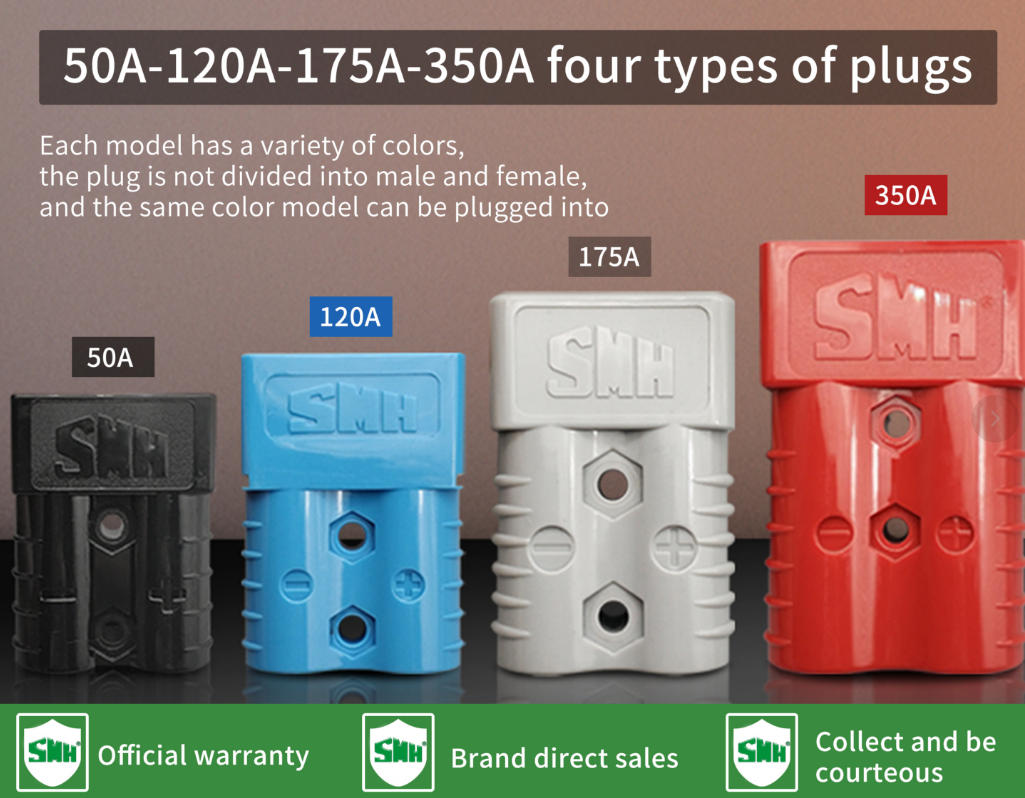
Key selection principles
- Current and voltage rating: Match connector ampacity and voltage to peak and continuous currents of charger/battery.
- Safety and standards: Prefer connectors that meet relevant standards (electrical, IP ingress protection, mechanical rating).
- Compatibility: Ensure vehicle, battery, and charger use the same connector family or provide approved adaptors.
- Durability and ease of use: Choose rugged, keyed connectors that resist arcing, corrosion, and mis-mating.
- Communication needs: For Li‑ion, ensure BMS/charger communication lines (CAN, SMBus, or dedicated signaling pins) are supported.
Commonly used connectors
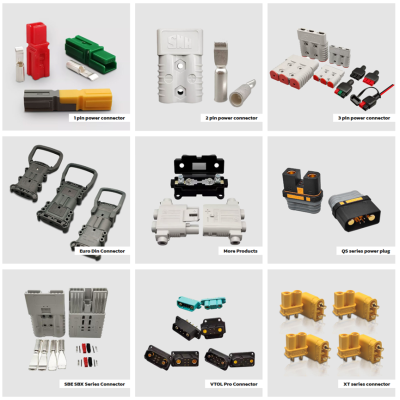
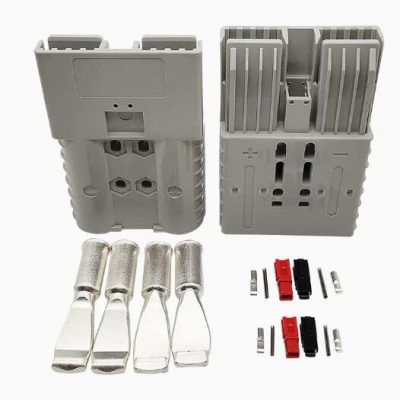
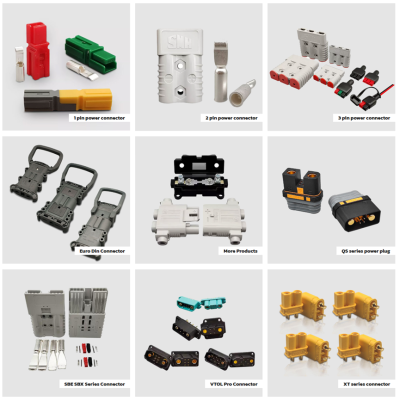
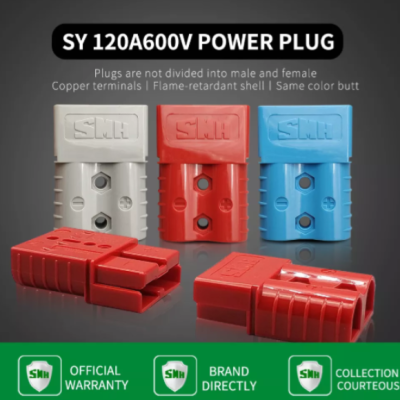
- SMH 2pin power connector series (SB175, SB350, etc.)
- Use: Very common for DC connections on forklifts, chargers, and battery packs.
- Why: Genderless design, high current capacity, robust contact area, easy to mate/unmate, available in multiple current ratings (suitable from small chargers up to high‑power systems).
- Recommendation: Use appropriately sized SY series (e.g., SB50 for lighter systems, SB350 or larger for high‑current industrial chargers). Ensure correct polarity and keying.
- Industrial AC plugs (IEC 60309 / CEE)
- Use: AC input for industrial chargers and charging stations. -Why: Standardized, rugged, and available in multiple voltage/current/pin configurations; suitable for temporary or fixed charger connections.
- Recommendation: Match phase (single/three-phase), voltage, and amp rating; ensure IP rating appropriate for environment.
- OEM / vehicle battery connectors and heavy‑duty plugs
- Use: Direct battery-to-vehicle terminals and high-current cable connections.
- Why: Provide low-resistance permanent connection for traction power.
- Recommendation: Use proper battery clamps/lugs sized to battery posts, with insulated covers for safety. Torque per manufacturer spec.
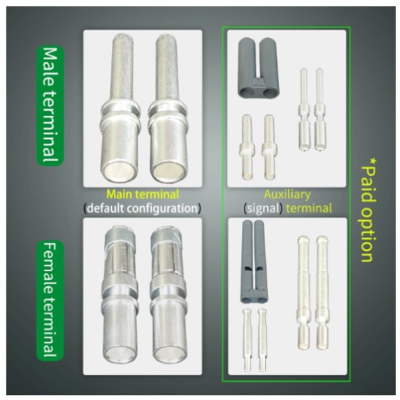
- Communication / signalling connectors (CAN, SMBus, custom)
- Use: Li‑ion battery packs require BMS communication to chargers or vehicle controllers.
- Why: Enables safe charging, state-of-charge reporting, and cell-level protection.
- Recommendation: Use standardized communication interfaces where possible and verify pinout/voltage levels with OEM.
- Other heavy‑duty DC connectors
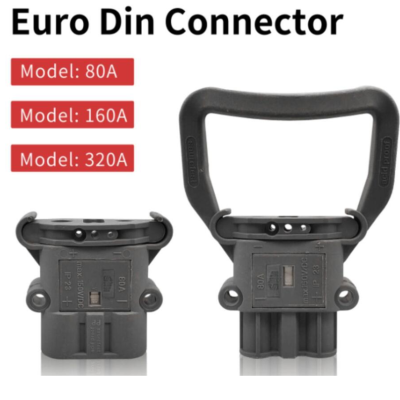
- Use: Some fleets use alternative industrial plugs (high‑current ring terminals, DIN-style connectors or proprietary plugs).
- Recommendation: Where proprietary connectors are used, maintain OEM-approved spares and adapters.
Practical recommendations
- Standardize across the fleet: Use the same connector families and ratings across vehicles and chargers to reduce adapters and human error.
- Match ratings with safety margin: Choose connectors rated above expected continuous current (25–30% headroom recommended).
- Choose IP-rated and corrosion-resistant materials for outdoor/washed environments.
- For Li‑ion retrofits: confirm BMS and charger communication compatibility and sufficiently robust connector for fast-charging currents.
- Implement lockout and interlock features where possible to prevent hot‑plugging under load or accidental disconnects.
- Maintain and inspect connectors regularly: check for wear, heat discoloration, and secure contacts.
Conclusion
Selecting the appropriate forklift battery plug depends on operating profile, budget, maintenance capacity, and safety/ventilation constraints. Connector choice is equally critical: favor rugged, correctly rated, and standardized plugs (e.g., SMH 2pin battery connector series for DC, IEC 60309 for AC) and ensure compatibility with vehicle and charger systems. Standardization, adequate current margins, and attention to communication requirements (for Li‑ion) will maximize safety and uptime.