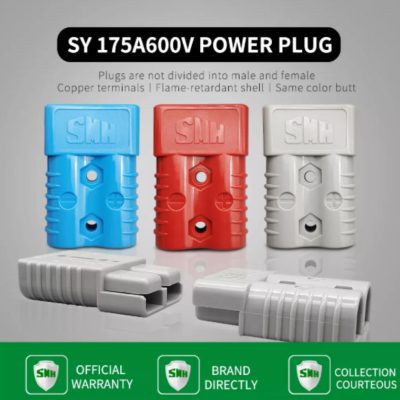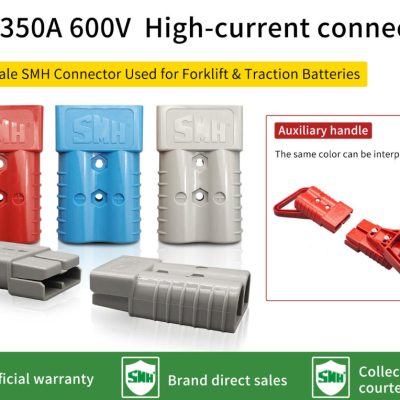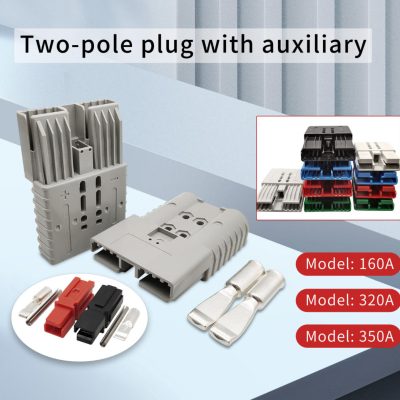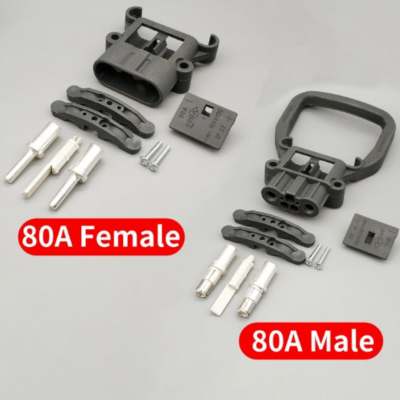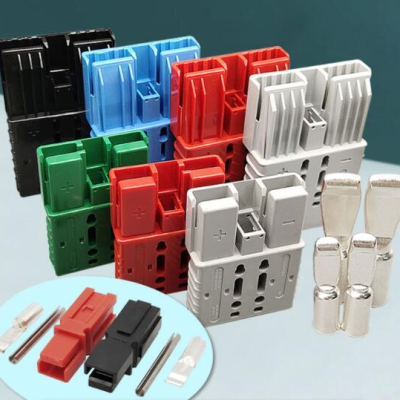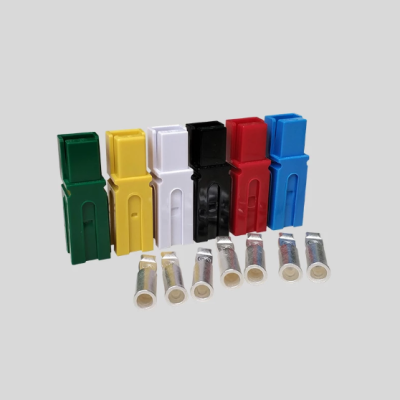
Introduction / key features:
- Type: Stacking, genderless power connectors with spring-clip contacts. They’re designed for high-current DC power connections and quick, tool-free mating.
- Current rating: SBE320 is typically specified around 320 A; SBX350 in the SBX family is commonly rated near 350 A (confirm exact rating from the manufacturer datasheet for your variant).
- Voltage: Intended for low-voltage DC systems (battery, inverter, etc.); working voltages vary by model—check the datasheet for exact maximum system voltage.
- Construction: Heavy-duty contacts (usually copper alloy, often plated), reinforced thermoplastic housings for mechanical/thermal durability, polarization/keying to prevent mis-mating.
- Key design traits: genderless/mate-any-way capability, stackability, high-cycle durability, low contact resistance, secure retention, and often modular mounting options (panel, cable).
- Environmental: Many variants are splash-resistant and tolerant of industrial environments; some versions offer higher ingress protection or insulating shrouds.
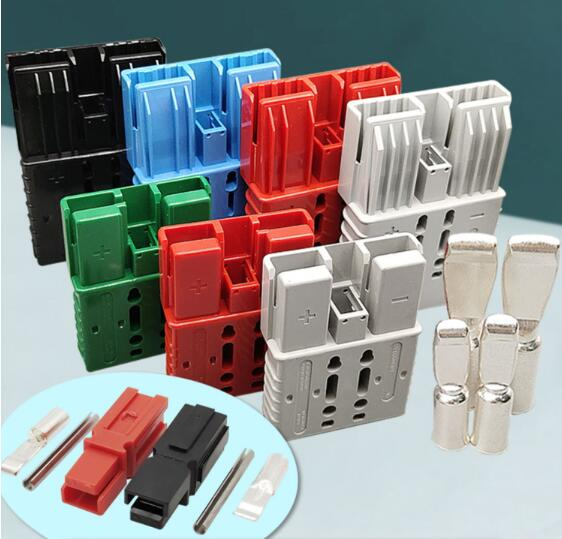 Common applications:
- Battery connections for electric vehicles, forklifts, floorcare equipment, and material-handling vehicles.
- Renewable-energy systems (battery banks, hybrid storage/inverter connections).
- UPS and data-center battery/inverter power distribution.
- Heavy-duty industrial equipment and robotics requiring quick-disconnect high-current DC feeds.
- Telecom and power backup systems where high current, reliable DC connections are needed.
- Mobile power units, generators, and charging stations.
- Marine and off-grid systems with high-current battery interconnects.
Installation & selection tips:
- Verify exact current and voltage ratings on the manufacturer datasheet for the specific SBE320/SBX350 part number before use.
- Choose correct cable AWG and crimp tooling specified by SMH to ensure low resistance and safe operation.
- Consider environmental sealing, mounting style (in-line, panel, or recessed), and whether keyed housings or shrouds are needed to prevent accidental disconnect or mis-mating.
- For series/parallel battery connections, ensure connectors and cables match system fault-current capability and thermal dissipation requirements.
Follow manufacturer guidance for mating cycles, torque/crimp specs, and regular inspection in high-vibration or outdoor use.