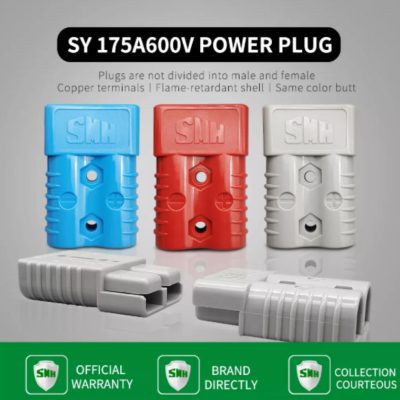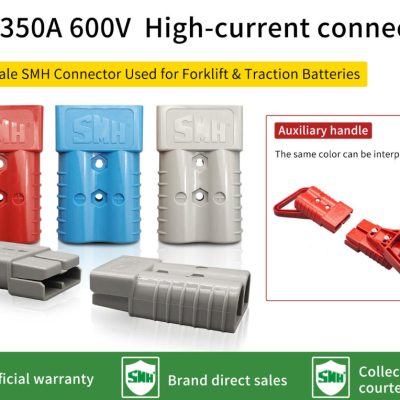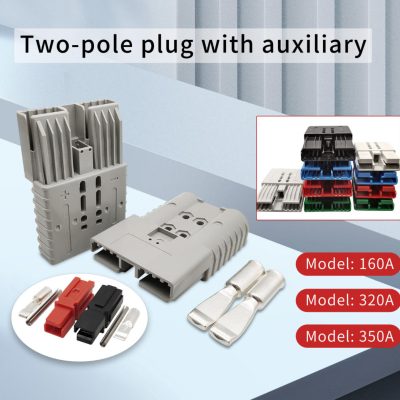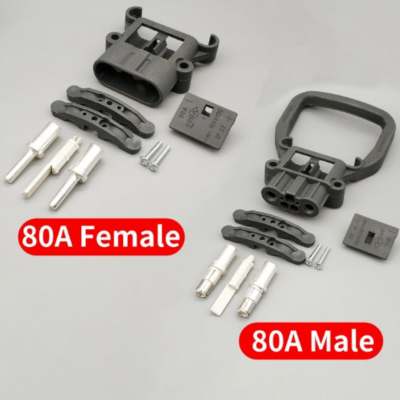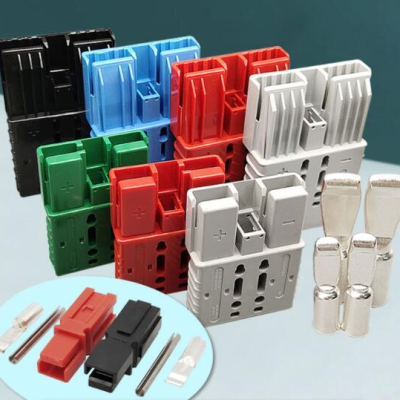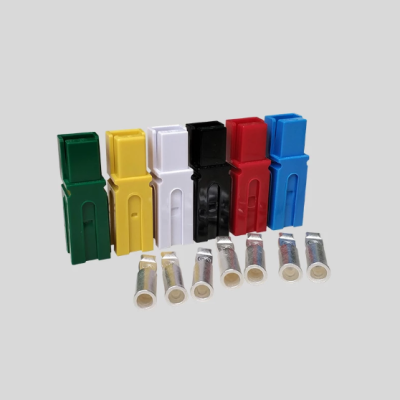
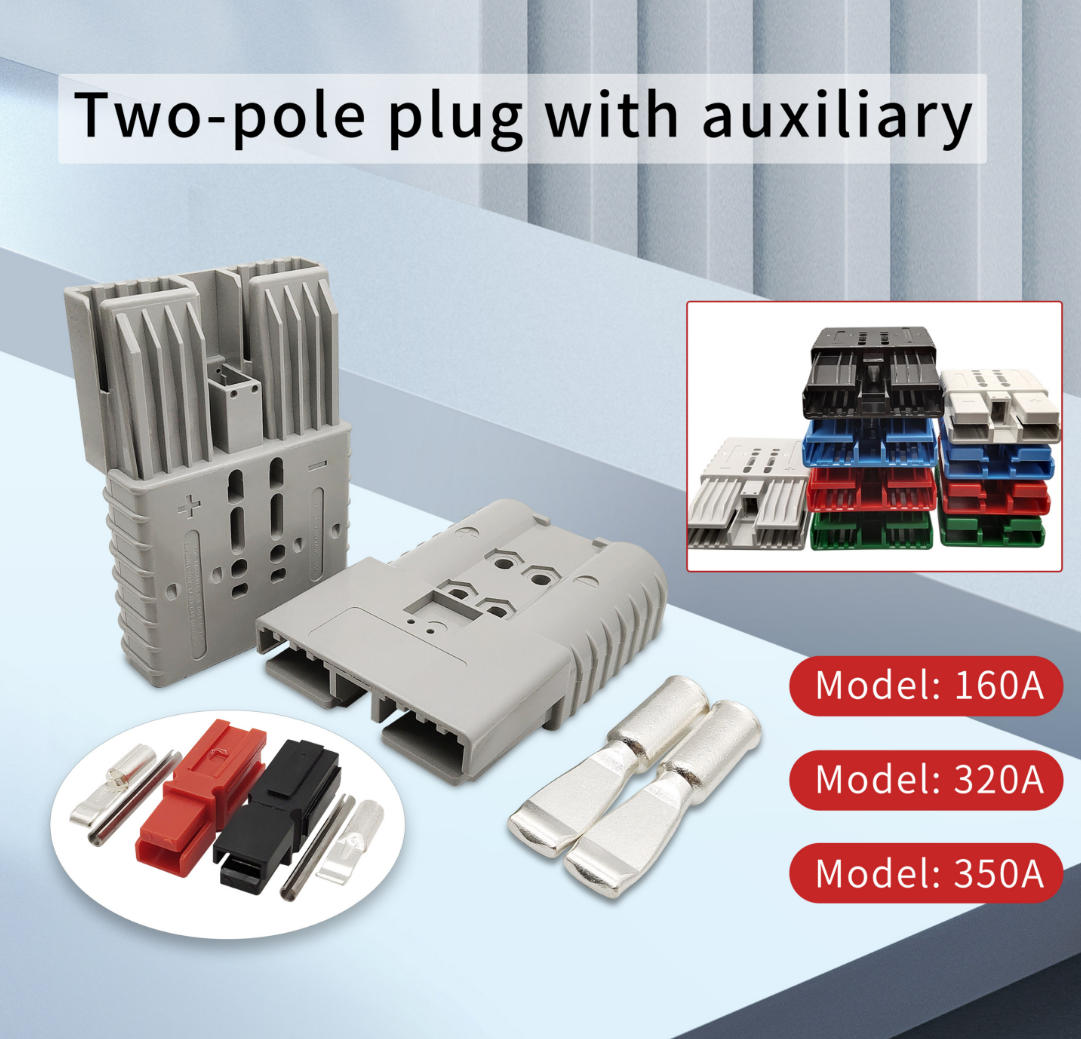
 Selecting the right charging connector for electric forklifts is crucial for safety, uptime, battery life, and total operating cost. A connector is more than a physical link: it must meet electrical, mechanical, environmental, and system-integration demands of the fleet and facility. The following outlines the primary factors to consider when choosing a forklift charging connector.
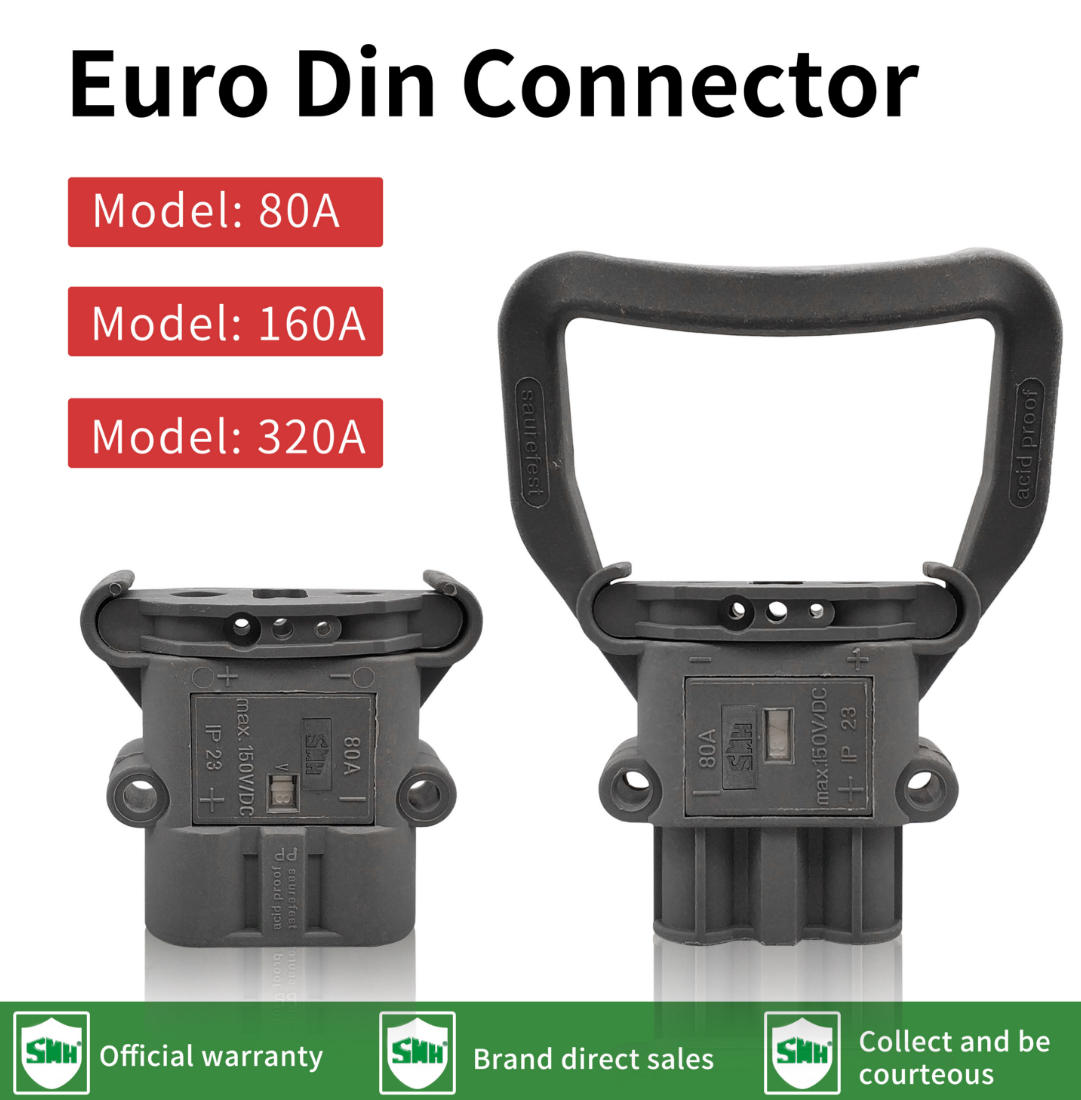
- Electrical performance
- Rated current and peak capacity: Choose a connector whose continuous and short-duration current ratings exceed charging and potential regenerative currents (allow 20–30% safety margin).
- Rated voltage: Ensure the connector’s voltage rating meets or exceeds the battery system and charger maximum voltages.
- Contact resistance and conductivity: Low contact resistance reduces heat and energy loss; high-quality contact materials (e.g., silver- or gold-plated copper alloys) improve performance.
- Polarity and anti-misconnection: Design must prevent reverse polarity and accidental short circuits.
- Thermal management and safety
- Temperature rise at rated current: Verify acceptable temperature increases and thermal endurance.
- Over-temperature protection: Consider connectors with built-in temperature sensors or compatibility with thermal monitoring to avoid overheating.
- Insulation and creepage distances: Proper insulation prevents arcing and leakage under operating conditions.
- Fire and flame resistance: Use materials with appropriate flammability ratings (e.g., UL94) for industrial safety.
- Mechanical design and durability
- Insertion/removal lifecycle: Match connector durability to expected plug/unplug frequency (thousands to tens of thousands of cycles).
- Locking and retention mechanisms: Positive locks or latches prevent accidental disconnects under vibration or movement.
- Robustness to shock and vibration: Industrial-grade housings and secure contact retention are essential in forklift environments.
- Ergonomics: Consider ease of handling—weight, grip, and required insertion force—for operators to reduce fatigue and misuse.
3.Environmental resistance
- IP and sealing: Select IP rating appropriate for the environment (dust, washdown, outdoor exposure — e.g., IP54, IP65).
- Corrosion and chemical resistance: Materials should withstand warehouse chemicals, cleaning agents, and salt fog where applicable.
- Operating temperature range: Ensure reliable operation across expected ambient temperatures (cold stores, hot warehouses).
4.Compatibility and standards
- Interoperability: Connector must be compatible with battery packs, chargers, BMS, and charging stations used by your fleet.
- Industry standards and certifications: Prefer connectors and vendors compliant with relevant safety and quality standards.
- Future-proofing and standardization: Standard connectors reduce inventory complexity and ease fleet expansions or vehicle swaps.
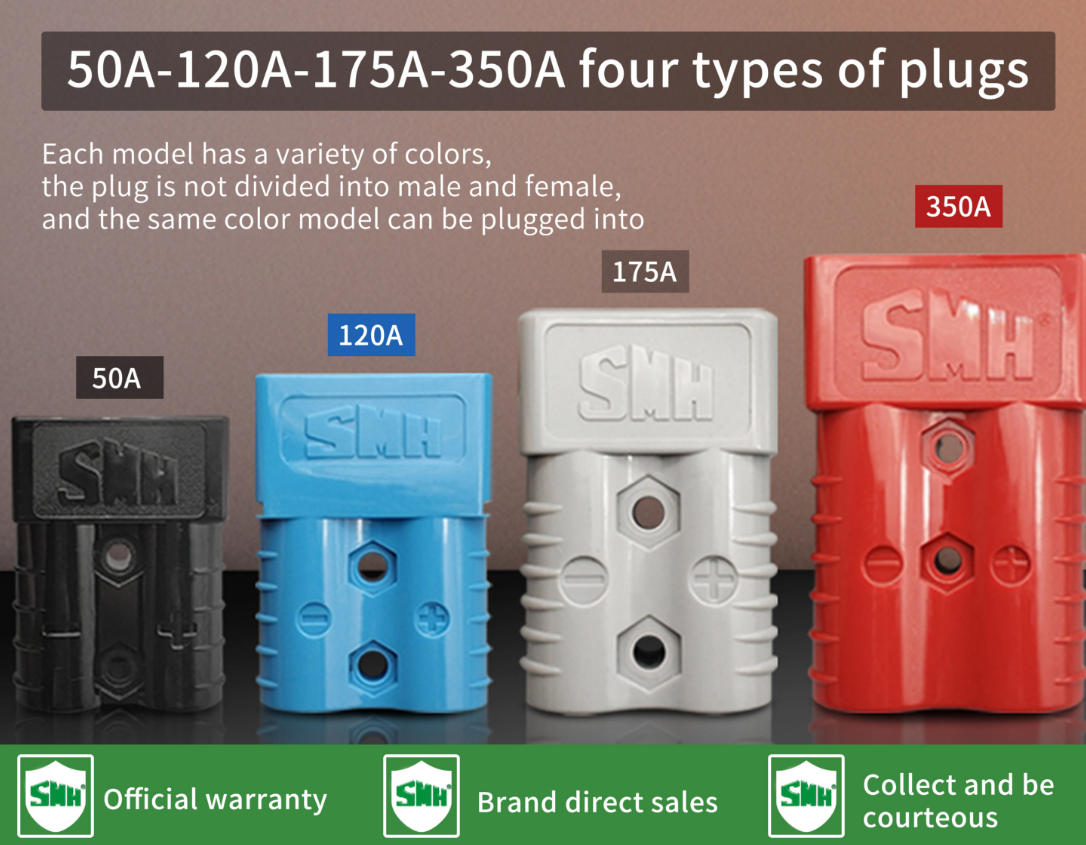
Conclusion
Choosing the right forklift charging connector requires balancing electrical and thermal capability, mechanical robustness, environmental protection, compatibility with battery and charger systems, and ongoing maintenance considerations. Prioritize safety and reliability first, then weigh features such as smart communication, serviceability, and long-term cost. For best results, define your fleet’s charging profile, operating conditions, and maintenance strategy, then validate candidate connectors with real-world testing before large-scale adoption. If you provide your forklift model, battery specs, and charging setup, I can recommend specific connector features and a short selection checklist.